Twenty-Five Years of Metro Mayors: The Quiet Revolution That Didn't Reach the Bank Account
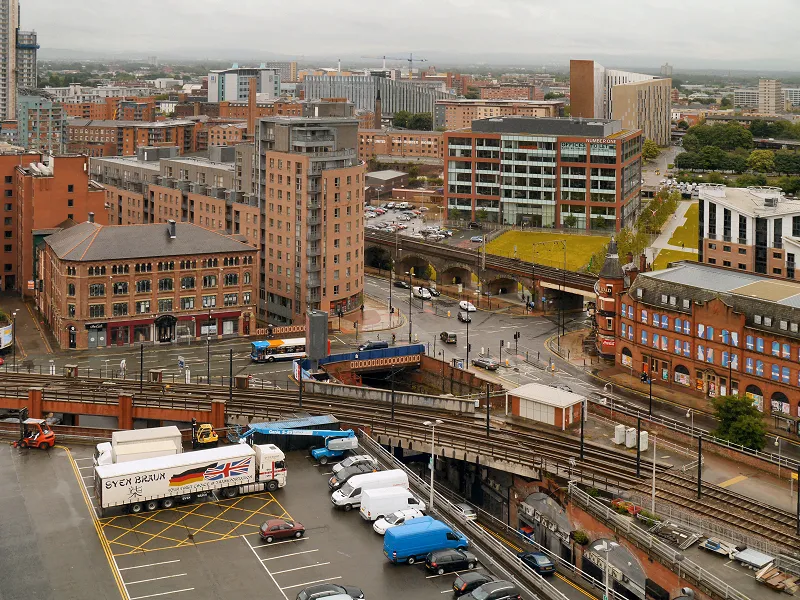
Photo: David Dixon , CC BY-SA 2.0, via Wikimedia Commons
Stand at the northern end of Platform 14 at Euston and you can watch the centralising instinct of the British state in action. Every train out of London is a reminder that decisions about buses, hospitals, schools and wages in Wigan or Walsall are, in important respects, still taken in the capital — by ministers most of those places did not vote for.
Devolution was supposed to change that. A quarter of a century on from the first wave of reforms, it is worth asking a blunt question: has the great experiment worked?
How We Got Here
The story begins, unevenly, in 1997. New Labour's early devolution settlements — Scotland, Wales, Northern Ireland, and a London Assembly and Mayor from 2000 — transformed parts of the Union. But England outside the capital was left largely untouched. The 2004 North East assembly referendum, rejected by 78 per cent of voters, spooked governments for a decade.
The revival came from an unlikely source: austerity. From 2010 onwards, Whitehall's answer to collapsing local budgets was to offer city regions a deal — accept an elected mayor, pool your local authorities into a combined authority, and receive powers and a modest investment fund in return. Greater Manchester signed first in 2014. Others followed: the West Midlands, Liverpool City Region, Tees Valley, Sheffield, Leeds, and, eventually, everywhere that could be persuaded.
Today, England has more than a dozen metro mayors, with elections covering areas containing over half of England's population following the 2024 and 2025 rounds. It is, by any measure, the most significant reshaping of English governance in fifty years. It happened quietly, deal by deal, with no constitutional convention and no grand settlement.
Three Regions, Three Verdicts
Greater Manchester is the showcase. Andy Burnham's decade in office has produced the 'Our Pass' free bus travel for young people, the franchising of buses back into public control after decades of private fragmentation, and a rough-sleeping initiative that made headlines nationally. Manchester's economy has grown faster than the national average since 2014. But dig deeper and the caveats appear: the city region's growth has been concentrated in its core, life expectancy in parts of north Manchester still trails the Home Counties by nearly a decade, and the combined authority's entire settlement — around £1.2 billion over thirty years — is less than the annual budget of a single large London borough.
The Tees Valley offers a different lesson. Ben Houchen's mayoralty demonstrates both the promise and the peril of concentrated power. The Tory mayor won three elections in a Labour heartland by making devolution personal: the acquisition of the former SSI steelworks site at Teesside, the freeport designation, the airport rescue. Yet the Teesside story also shows what happens when scrutiny is thin — auditors and select committees have repeatedly raised questions about governance and transparency at the South Tees Development Corporation. Power without accountability is a gamble, whichever party holds it.
The West Midlands illustrates the squeeze. Andy Street, a Conservative mayor in a Labour region, used the mayoralty to champion transport investment — the Sprint bus corridors, extensions to the Metro tram network. His 2024 defeat to Richard Parker was fought substantially over the very limits of the role: a mayor who cannot set business rates, cannot raise significant revenue and depends on Whitehall for capital is a mayor whose manifesto is a wish list. The West Midlands still has productivity levels some 20 per cent below the national average, a gap four decades of policy has failed to close.
The Verdict So Far
So: has devolution fixed the North-South divide? No. The UK remains one of the most regionally imbalanced wealthy countries on earth — OECD analysis has repeatedly found regional inequality in Britain higher than in France, Germany or the Scandinavian states. Public investment per head in London transport still dwarfs that in the North. Government spending decisions, civil service locations and major infrastructure priorities remain stubbornly London-weighted, HS2's northern leg notwithstanding.
But has devolution failed? Also no. The mayors have proven one thing conclusively: when you give places a voice, they use it, and voters notice. Turnout in metro mayoral contests, while modest, has grown. Burnham's national profile — and the persistent speculation about his ambitions — tells you something about the hunger for regional leadership that Westminster cannot supply.
What Full-Fat Federalism Would Look Like
If the current model is devolution lite, what would the full-fat version involve? Three ingredients.
First, fiscal devolution. English regions raise roughly 5 per cent of their own revenue, compared with far higher figures in Germany's Länder or Canada's provinces. Until combined authorities control a meaningful revenue base — a share of income tax, stamp duty or business rates raised locally — they remain supplicants, not governments.
Second, comprehensive coverage. Devolution by piecemeal deal has left a postcode lottery of powers: Cornwall has one settlement, Cumbria another, and many places nothing at all. A statutory framework, guaranteeing every part of England equivalent powers, would end the negotiating lottery.
Third, a reformed centre. Federalism is not just about regions gaining power; it is about Whitehall giving it up. That means devolving employment support, skills budgets and health commissioning — and rebalancing public investment so that the North and Midlands receive their fair share.
None of this will happen quickly, and none of it will happen without sustained public pressure. But the direction of travel is now unmistakable. Twenty-five years in, Britain's devolution experiment has proven the concept and exposed the ceiling. The next chapter — genuine fiscal federalism for the whole Union — is the one that would finally start to shift money, not just meetings, out of London.
The trains will still leave from Euston. The question is who gets to decide what happens when they arrive.

